Research · Computation
Computation
The brain is a dynamical system operating across a vast range of spatial and temporal scales, from the firing of individual neurons to the coordinated activity of global brain networks. Our computational work develops the mathematical and theoretical frameworks needed to make sense of this complexity.
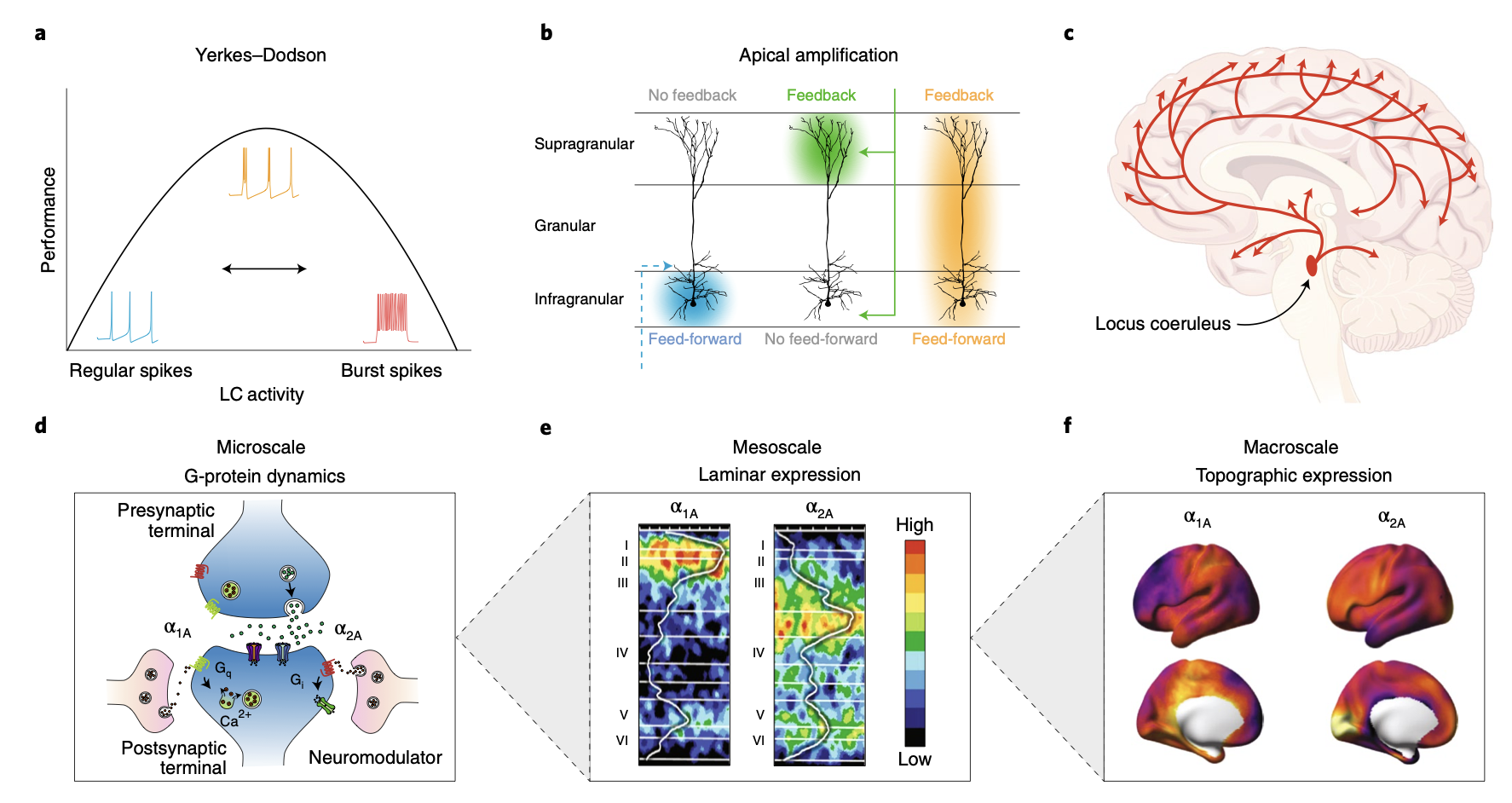
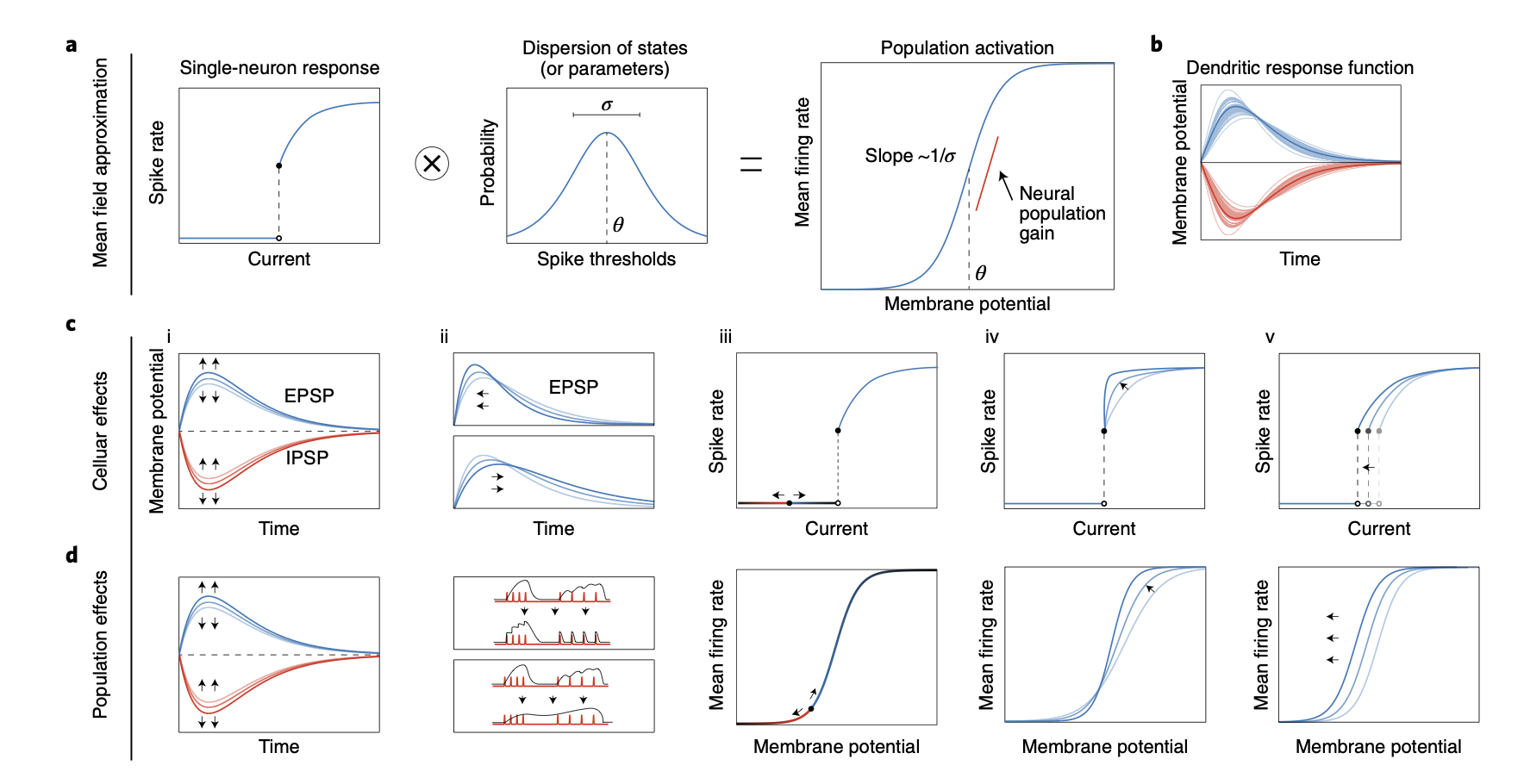
A central question driving this research is how the brain achieves flexible, adaptive behaviour despite being built from relatively simple components. We draw on tools from dynamical systems theory, information theory, and biophysical modelling to investigate how neural systems organise, integrate information, and shift between different functional states. A key insight running through this work is the importance of gain modulation: neuromodulatory systems continuously adjust the sensitivity of neural circuits, effectively tuning the gain of computation across the brain. Understanding how this works, and how it breaks down, sits at the heart of our theoretical programme.
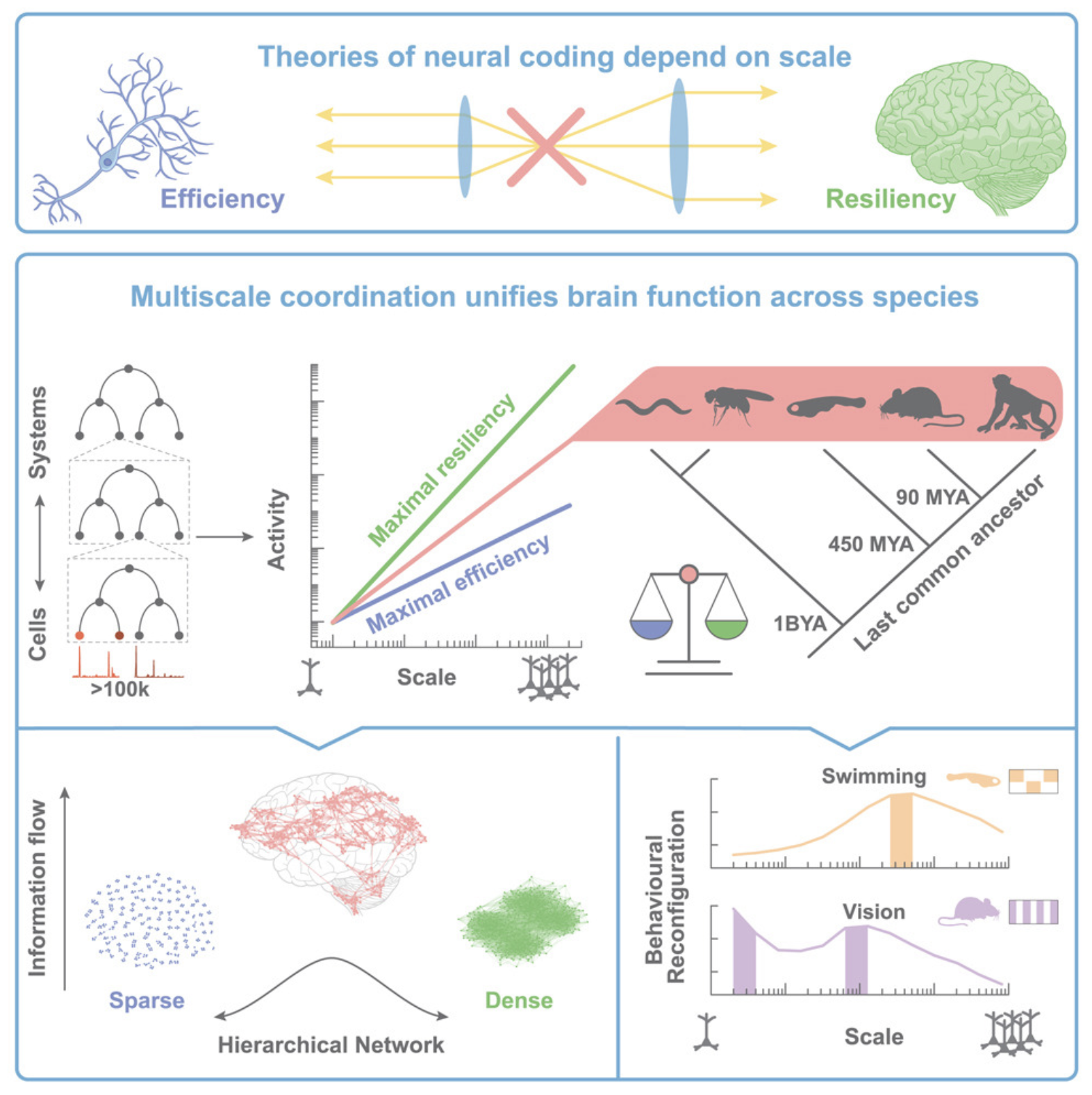
We build models that bridge biological detail with systems-level predictions. This means connecting the cellular and molecular properties of neuromodulatory pathways (the locus coeruleus, thalamus, and cholinergic projections) to the large-scale patterns of activity visible in human neuroimaging. This multi-scale approach reflects a core conviction: that a complete account of brain function must be coherent across levels of organisation, from synapses to networks.
A recurring theme is the tension between stability and flexibility. Neural systems must be stable enough to reliably represent and act on information, yet flexible enough to rapidly reconfigure as circumstances change. How the brain manages this balance, and what goes wrong when it cannot, motivates much of the theoretical work in the group.
3 Projects
Multiscale Brain Organisation
Investigates how neural systems organize across multiple scales, from local circuits to global network dynamics. This project integrates computational models with empirical neurobiological data to understand principles of brain organization.
AAS + Gain Modulation
Studies how gain modulation in ascending arousal systems affects neural computation and behavior. Combines theoretical models of gain control with experimental measurements to understand how arousal states modulate sensory and motor processing.
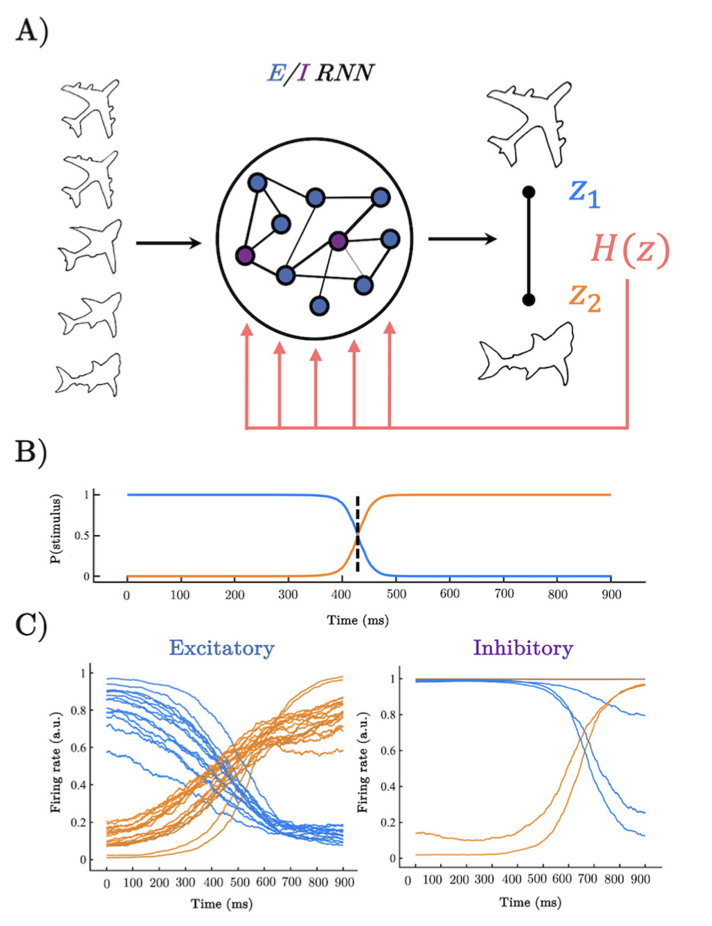
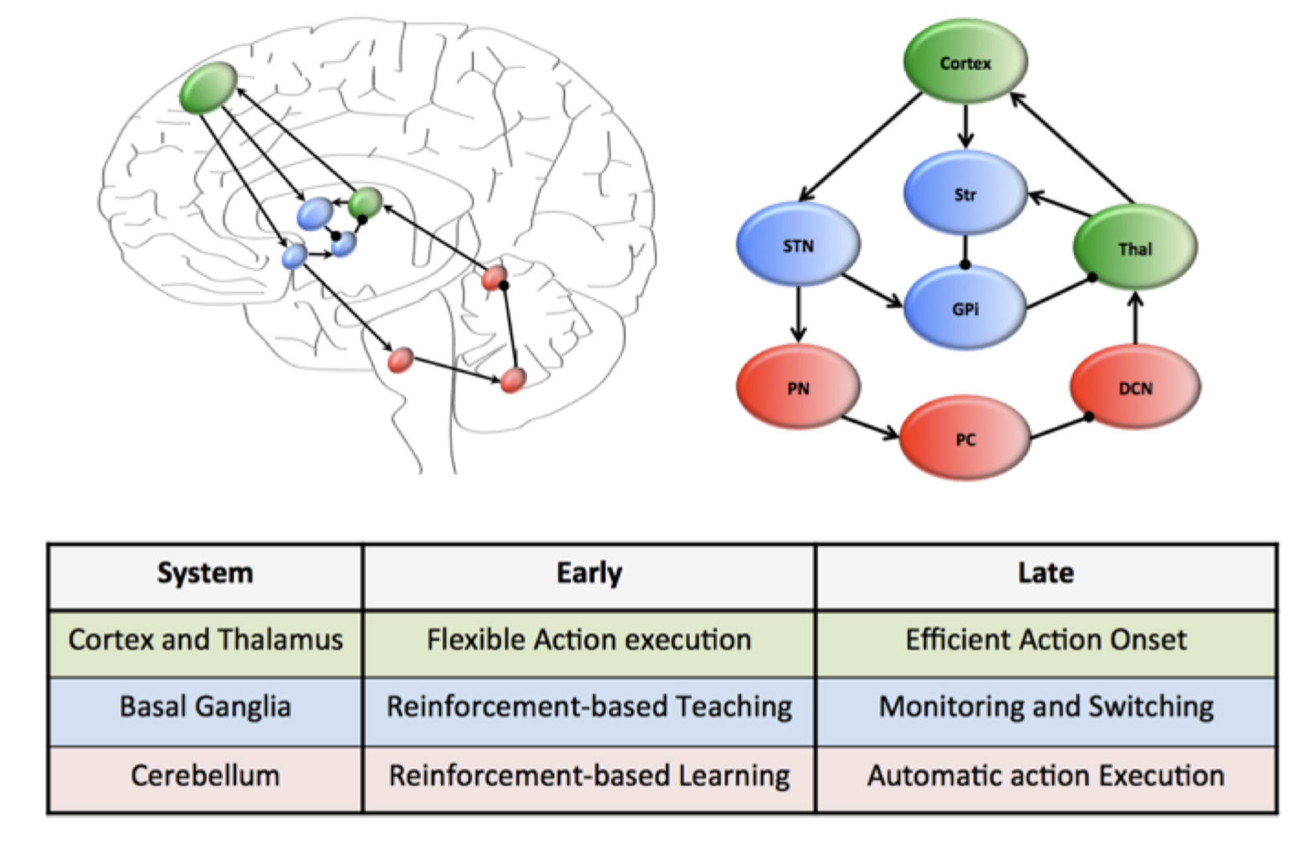
Delegation to Automaticity
Investigates the neural mechanisms by which cognitive control is gradually transferred from attention-demanding systems to automatic/subcortical systems during skill learning. Tracks circuit reorganization as behaviors transition from conscious to unconscious processing.